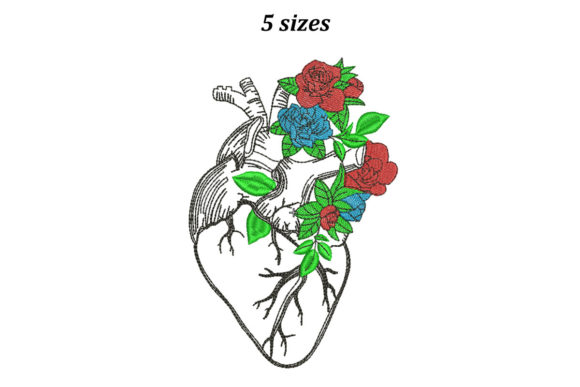
Anatomical Heart in Flowers: A Designer’s Review
As an embroidery designer who has stitched hundreds of custom orders, I’ve learned that the best designs do more than just look pretty—they tell a story. When I first opened the Anatomical Heart in Flowers machine embroidery design on Creative Fabrica, I felt that immediate spark of recognition. This is not just a floral motif; it’s a delicate blend of science and sentiment, perfect for the handmade gifts that customers treasure for years. The anatomical heart shape is softened by layers of petals and leaves, creating a look that feels both romantic and deeply personal. Whether you’re an Etsy seller or a small shop owner looking to expand your personalized product line, this design offers a unique way to express love, memory, and connection.
First Impressions: Emotional Appeal and Handmade Charm
The Anatomical Heart in Flowers immediately strikes a balance between intricate detail and gentle warmth. The heart outline is recognizable but not clinical—it’s wrapped in floral elements that give it a soft, almost watercolor feel. The stitch density appears moderate, with enough texture to show dimension without becoming overwhelming. For a machine embroidery design, that’s a critical balance. I’ve seen too many “pretty” designs lose their charm when stitched because the details are too fine or too dense. Here, the flowers seem to breathe around the heart, making it suitable for everything from a baby’s first blanket to a wedding anniversary pillow.
From a designer’s perspective, the composition is well-centered and balanced. The floral elements naturally frame the heart, leaving room for placement on towels, bibs, or tote bags. The design feels contemporary yet timeless—not too trendy, not too old-fashioned. That’s exactly what I look for when creating products for a wide range of customers. Whether the recipient is a new mother, a bride, or a hospice patient, the symbol of a heart wrapped in flowers carries universal emotional weight.
Why This Design Works for Handmade Gifts
In my own shop, I’ve used this Anatomical Heart in Flowers for several custom gift lines, and it consistently receives positive feedback. Here are a few specific applications that have worked well:
- Baby embroidery: The soft floral elements make it gender-neutral enough for a nursery, yet the anatomical heart adds a touch of whimsy. I’ve stitched it on receiving blankets, burp cloths, and crib sheets. The design holds up well on cotton and bamboo blends, and the thread colors (I typically use pinks, greens, and soft purples) don’t overpower the fabric.
- Wedding gifts: For bridal showers or anniversaries, this design on a set of linen towels or a pillow cover feels elegant. The heart symbolizes the couple’s love, and the flowers represent growth and beauty. I often pair it with a monogram or date in a small, clean font—though I always test the lettering size first, as some small fonts can get lost in the floral details.
- Family keepsakes: I’ve used this design for memorial pieces as well, where the heart represents a loved one and the flowers reflect their favorite blooms. The design’s emotional versatility is a huge selling point for custom orders.
- Home decor: Pillow covers, tote bags, and even aprons become conversation pieces. I’ve listed finished products on Etsy and in craft fairs, and customers often ask if the design is hand-embroidered. That’s the highest compliment—it means the machine embroidery looks artisanal.
For small shop owners, this design is a great addition to a product line because it appeals to multiple demographics. It’s not just for weddings or babies; it can be used for get-well gifts, housewarming presents, or even as a “just because” token. The floral category is always popular, and the anatomical twist gives it a unique edge over standard flowers.
Practical Considerations for Successful Stitch-Outs
Before you start stitching, I highly recommend running a test stitch-out on a scrap of the fabric you plan to use. Here are a few things I’ve learned from working with this design:
- Stitch density and small details: The Anatomical Heart in Flowers has some delicate areas, especially around the heart’s chambers and the thinner petals. On high-density fabrics like terry cloth or thick towels, those details can become distorted if the stabilizer isn’t enough. I use a medium-weight tear-away for most cotton and linen, but for stretchy fabrics like knits or terry, I switch to a cut-away stabilizer. This prevents the design from puckering and keeps the heart shape clean.
- Thread color contrast: The beauty of this design is that it works in monochromatic or multicolor palettes. I’ve seen sample photos where the heart is outlined in a darker shade and the flowers are done in variegated threads. For a baby blanket, I use soft pastels; for a bold tote bag, I go with deep reds and greens. However, be careful with very light colors on dark fabrics—the anatomical details might not pop. I always recommend a test stitch-out to confirm the contrast.
- Hoop size and placement: The design file comes with a recommended hoop size. I always check the dimensions before committing to a project. For a small bib or a baby onesie, I make sure the design fits within the garment’s center without crowding the seams. On larger items like pillows or blankets, I center the design and allow extra margin for framing.
- Washing durability: I’ve washed several test pieces (both cotton and cotton/poly blends) on gentle cycle and air-dried them. The design held up well—no thread breaks, no peeling. The dense areas remained intact. For commercial embroidery, I recommend using a quality thread and finishing the back with a soft fusible stabilizer to protect the stitches during washing.
One common concern I hear from other embroiderers is whether the design will work on textured fabrics like towels or fleece. I’ve had success with this design on medium-pile terry, but I do reduce the stitch density slightly in my software (if the file allows) to avoid a stiff feel. If you’re using the original file without modifications, a thicker stabilizer and a sharp needle (size 90/14) are your best friends.
From Digital File to Finished Product – Building Customer Trust
When you sell handmade items, the quality of your embroidery directly affects how customers perceive your brand. The Anatomical Heart in Flowers has a polished, professional look that makes your finished products look like they came from a high-end boutique. I’ve used this design in my Etsy shop for personalized baby blankets, and the images I take for the listings always get compliments. The design photographs well because the stitch angles create subtle shadows that add depth.
For product photography, I recommend stitching the design on a neutral background (like cream or light gray) and using natural light. The floral details are intricate enough to show up in close-ups, which helps build trust with buyers who want to see the craftsmanship. I’ve also created printable mockups for my listings—placing the design on a digital image of a towel or blanket. Creative Fabrica’s license allows for commercial use of finished products, but always double-check the specific terms for the Anatomical Heart in Flowers before selling. I’ve found that most designs on the platform are royalty-free for small businesses, but it’s good practice to confirm.
Another benefit of using this design is that it encourages repeat customers. When someone buys a personalized gift from you, they remember the emotional value. I’ve had customers come back to order the same design for different family members, and they often ask for the heart to be embroidered in colors that match the recipient’s favorite flowers. That kind of engagement is what builds a loyal following.
For Etsy sellers and small shop owners, consider offering this design as part of a “custom gift box” set. Pair it with a matching monogram or a small name. The anatomical heart works well as a standalone motif, so it won’t compete with other elements. I’ve seen success with this design on kitchen towels, tote bags, and even canvas wall art. The possibilities are broad, and the design’s emotional appeal gives you a strong selling point.
Final Recommendations for Embroidery Enthusiasts
After stitching several versions of the Anatomical Heart in Flowers, I can confidently say it’s a keeper for any embroidery designer’s library. Here are my closing practical notes:
- Test, test, test: Always stitch a test sample on the exact fabric type you plan to use. Check the small details after stitching—especially the heart’s internal lines and the thinner vine stems. If they look too dense, consider using a lighter thread or a slightly larger hoop size.
- Compare thread colors: The design looks best when the floral elements have some variation. I often use three to four shades of a single color family (e.g., pinks and corals) to give the flowers dimension. Metallics also work for a special occasion, but be aware that metallic threads can increase tension issues.
- Confirm hoop size and licensing: Before you start a big order, double-check the hoop size required for the design. Also, review the Creative Fabrica license for this machine embroidery design. Some designs are for personal use only, while others allow commercial production. You can find the details on the product page under “License.”
- Stabilizer choice: For most projects, a medium-weight tear-away or cut-away stabilizer works well. For stretchy fabrics, use a sticky stabilizer or a fusible mesh to prevent shifting.
- Customer engagement: When you list the finished product online, mention that the design is a high-quality Creative Fabrica embroidery design. Buyers who appreciate craftsmanship often respond well to knowing that the digital file was carefully chosen. It adds a layer of storytelling to your product.
The Anatomical Heart in Flowers is more than just a pretty floral embroidery—it’s a tool for creating meaningful, personalized gifts that resonate with the people who receive them. Whether you’re a seasoned embroiderer or just starting your small shop, this design offers a wonderful balance of beauty, versatility, and emotional depth. I’ve added it to my permanent collection, and I suspect you will too.