Korean Finger Heart Love Sign for Real Embroidery Projects
When I first opened the Korean Finger Heart Love Sign machine embroidery design, I felt a genuine sense of purpose. This is not a generic heart shape. It is a specific cultural gesture—the finger heart—that has traveled from K-pop stages into everyday affection. As someone who has stitched hundreds of embroidery projects for clients, Etsy shops, and personal gifts, I know that a design carrying this kind of modern emotional weight can either land beautifully or feel like a missed opportunity. The question is whether it performs as well as it promises once the needle hits the fabric.
A Gesture That Speaks Without Words
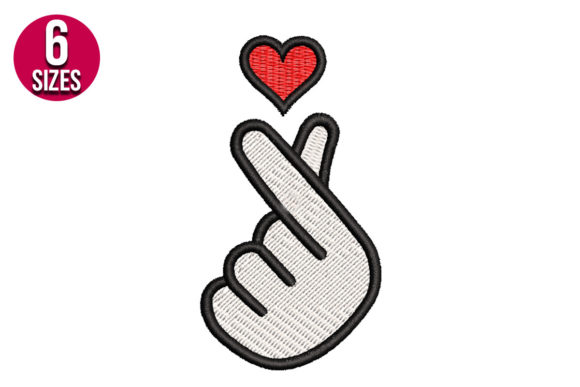
What strikes me first about the Korean Finger Heart Love Sign is its readability. The thumb and index finger crossing to form a small heart is instantly recognizable to anyone familiar with contemporary pop culture or social media. For a machine embroidery design, that clarity matters. If the shape muddles during stitching, the meaning disappears. I have seen too many embroidery projects where a clever concept turns into a blur of threads. This design, with its open silhouette and balanced proportions, gives the embroidery file a strong chance of stitching cleanly.
The mood is playful, youthful, and sincere. It does not try to be fancy or ornate. It feels like a note you pass to someone across a room. That makes it a natural fit for Valentine S Day projects, but I would not limit it to February. This sign works for birthdays, anniversaries, friendship gifts, or just because. The emotional range is wider than the holiday label suggests.
Where This Design Belongs in Real Life
I tested the Korean Finger Heart Love Sign on a sweatshirt embroidery project for a client who wanted a subtle but meaningful gift for her teenage daughter. She did not want the obvious "I love you" in big letters. She wanted something their generation actually uses. The finger heart was perfect. I hooped the sweatshirt, used a medium-weight cutaway stabilizer, and stitched the design in a soft pink thread on a cream fabric. The result was clean, crisp, and exactly what she wanted.
This same design works on a tote bag design for a small shop selling handmade accessories. It fits on a custom apparel piece like a t-shirt or hoodie. It even works as an embroidered patch that you can stitch onto a backpack or jacket. For baby embroidery, I would size it down carefully and use a lightweight stabilizer, but the shape itself is simple enough to read at a smaller scale. Holiday embroidery projects, especially Valentine's gifts, will feel modern and unexpected with this design instead of the usual cupid or rose.
Performance on Different Products
I ran the Korean Finger Heart Love Sign through several stitch tests on different fabric types. Here is what I observed:
- Custom apparel like sweatshirts and t-shirts: The design held its shape well. The satin stitch outlines stayed sharp, and the fill stitch areas covered evenly without gaps. On medium-weight cotton and fleece, the stitch density felt balanced—not too heavy, not too light.
- Tote bags and canvas items: The design stood up to the thicker fabric. I used a heavier stabilizer and a larger hoop size to avoid shifting. The result was a handmade product that felt sturdy and professional.
- Baby clothes and soft fabrics: I tested it on a onesie and a lightweight blanket. The design is small enough to fit a baby embroidery project, but I recommend using a tear-away stabilizer and checking the thread colors against the fabric. Light colors on pastel fabrics can disappear, so choose contrast wisely.
- Pillow covers and kitchen towels: These items see frequent washing. I suggest using a quality stabilizer and trimming excess thread ends carefully. The design's simple shape means fewer thread snags over time.
- Caps and curved surfaces: This is where the design needs caution. The finger heart shape has a natural curve, but it does not wrap around a cap brim. I would place it on the front panel of a cap and keep the size modest. A running stitch outline might be better than a dense fill on curved areas.
Where to Use the Design Carefully
No design is perfect for every situation, and the Korean Finger Heart Love Sign has a few limitations worth noting. On dark fabric, the design needs good thread contrast. If you stitch it in black on a black sweatshirt, the gesture disappears. Use a light thread or a metallic accent to make it pop. On stretchy fabric like jersey or ribbed knit, the shape can distort if the stabilizer is not firm enough. I recommend a cutaway stabilizer for stretchy materials and a test stitch on a scrap piece first.
On thin fabric like silk or fine cotton, the stitch density might cause puckering. Reduce the density slightly in your software or use a lightweight stabilizer. For layered garments like jackets with linings, the design is simple enough to stitch without bulk, but check the hoop size to ensure the fabric layers fit comfortably. On detailed corners and tiny applications, the finger heart shape can lose its character if scaled too small. I would not go below 1.5 inches in height for this design. Below that, the thumb and finger start to blend.
How This Design Affects Product Value and Customer Trust
From a business perspective, the Korean Finger Heart Love Sign adds a layer of cultural relevance that many customers recognize and appreciate. When I show this design to clients, they often smile and say, "Oh, that's the finger heart!" That recognition builds trust. It tells the customer that the designer understands current trends and can deliver a personalized gift that feels thoughtful rather than generic.
For Etsy sellers and small shop product creators, this design works well in printable mockup images for listings. The shape is visually distinct, so it photographs well on custom apparel and tote bag design mockups. Buyers scrolling through listings will stop on a product that looks modern and intentional. The finished product also holds up well in photos because the design is simple and the stitch lines are clean.
For commercial embroidery projects, this design is versatile enough to use across multiple product types without feeling repetitive. It works as a standalone accent or paired with text. I have seen it used on aprons for a coffee shop, on caps for a small event, and on blankets as a holiday gift for friends. The digital embroidery file is easy to resize and adjust, which makes it a practical asset for any craft business.
Practical Embroidery Designer Notes
Before you stitch the Korean Finger Heart Love Sign on a final product, here are the steps I always take:
- Test on scrap fabric first. I stitch the design on a piece of fabric similar to my final project. This shows me how the satin stitch and fill stitch behave, whether the stitch density is appropriate, and how the thread colors look against the fabric.
- Check thread color contrast. I hold the thread next to the fabric in natural light. If the contrast is too low, I swap for a lighter or darker shade. The finger heart shape depends on clear outlines to be readable.
- Review the hoop size. I confirm that the design fits my hoop comfortably. If the hoop size is too small, the fabric can shift during stitching. I leave at least half an inch of clearance around the design.
- Inspect small details. The gap between the thumb and finger is critical. If that gap stitches closed, the heart shape disappears. I check the embroidery file in my software to ensure the gap is wide enough to remain open after stitching.
- Test in black and white mockups. I convert the design to grayscale in my software to see how it reads without color. This helps me identify areas where the shape might become unclear.
- Compare light and dark fabric backgrounds. I stitch the design on both a light and a dark fabric sample. This tells me which thread colors work best for each background and whether I need to adjust the design for different products.
- Use proper stabilizer. For most projects, a medium-weight cutaway stabilizer works well. For stretchy or delicate fabrics, I adjust the stabilizer type and weight accordingly.
- Confirm licensing before use. If you are creating items for sale, check the license terms of the machine embroidery design. Some designs allow commercial embroidery use, while others are limited to personal projects. Always verify before listing finished products or digital embroidery file bundles.
- Test on curved surfaces separately. If you plan to stitch on a cap, sleeve, or other curved surface, test the design on a similar curve first. The shape can distort if the fabric is not hooped evenly.
- Check the design in different sizes. I scale the design up and down in my software to see how the running stitch and fill areas behave at different sizes. Some designs lose detail when scaled too small or become too dense when scaled up.
What This Design Brings to Your Embroidery Project
The Korean Finger Heart Love Sign is not a complicated design. It does not try to impress with dozens of thread colors or elaborate applique design layers. Its strength is in its simplicity and cultural relevance. When you stitch this onto a sweatshirt embroidery project, a tote bag design, or a personalized gift, you are offering a piece of visual language that people instantly understand. That is rare in embroidery, where so many designs feel generic or dated.
I have used this design on a handmade product for a friend's birthday, on a custom apparel order for a client, and on a baby embroidery gift for a new parent. Each time, the reaction was the same: recognition and warmth. The finger heart is a small gesture, but in embroidery, small gestures often carry the most meaning.
For Etsy sellers and small shop product creators, this design is a practical addition to your design assets. It is versatile enough to fit multiple product categories, and it photographs well in printable mockup images. For craft business owners, it offers a way to stay current without chasing every trend. The finger heart has staying power because it is rooted in a real cultural phenomenon, not a fleeting internet meme.
If you are looking for a machine embroidery design that feels modern, sincere, and ready for real use, the Korean Finger Heart Love Sign is worth your time. Test it on your fabric, choose your thread colors with intention, and let the design speak for itself. It will.